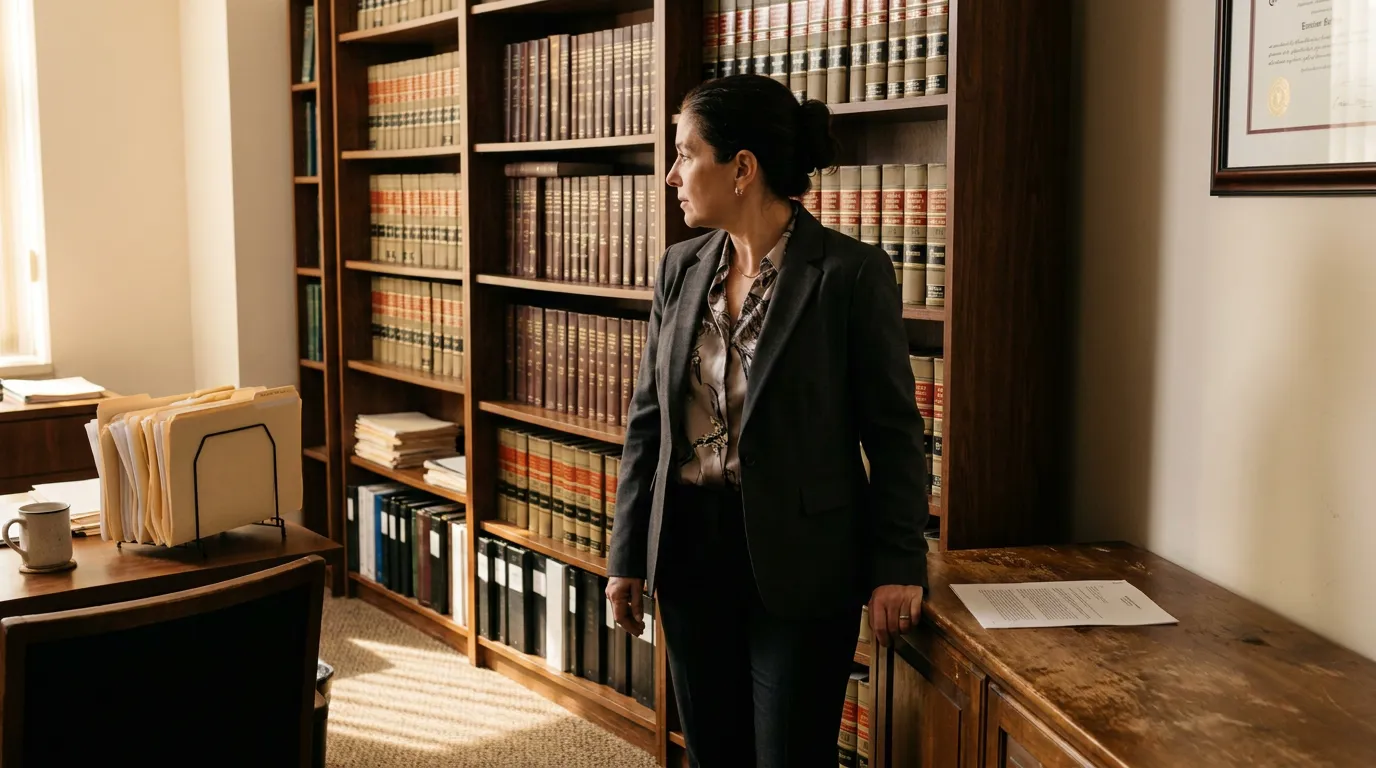
Why Buffalo Families Choose Roach, Lennon & Brown for Estate Planning
Estate planning in Buffalo, New York ensures loved ones are cared for, family businesses survive generational transitions, and documents signed today hold up under New York’s Estates, Powers and Trusts Law when they matter most. Families across Western New York choose Roach, Lennon & Brown, PLLC because the firm approaches planning as a long-term relationship with direct partner involvement, spanning trusts and estates, tax, business succession, and closely held company work.
If you are weighing whether now is the right time to build or update a plan, the answer is usually yes. Life events such as marriage, a new child, a business sale, or a parent’s death expose gaps in older documents. Learn more at Roach, Lennon & Brown, call 716-235-3025, or schedule a consultation with our team.
What a Century of Buffalo Niagara Practice Actually Signals
Longevity matters in estate planning because documents you sign are meant to outlive you. The firm carries a legacy tracing client representation back over a century, with partners who developed experience at Buffalo’s most prominent legal institutions before forming Roach, Lennon & Brown. That continuity matters when a trust drafted in one decade needs administration in another.
It also signals familiarity with how Western New York estates actually get administered. The firm is Buffalo Niagara-based and nationally capable, with offices in Buffalo and Niagara Falls. For families with cross-border ties to Toronto or multi-state property, that combination of local grounding and broader reach simplifies what would otherwise be fragmented.
💡 Pro Tip: Keep an updated list of account numbers, digital logins, insurance policies, and business ownership interests alongside your estate documents. Fiduciaries frequently spend more time locating assets than administering them.
Getting New York’s Will Formalities Right the First Time
New York sets specific execution formalities, and small missteps create large problems later. Under EPTL § 3-2.1(a)(1), every will must be in writing and signed at the end by the testator or by another person in the testator’s presence and direction. Matter following the testator’s signature, other than the attestation clause, is generally given no effect.
The witnessing rules are equally particular. EPTL § 3-2.1(a)(4) requires at least two attesting witnesses who, within one thirty-day period, attest the testator’s signature and, at the request of the testator, sign their names and affix their residence addresses at the end of the will. Separately, under EPTL § 3-2.1(a)(2), the testator must sign in each witness’s presence or acknowledge the signature to each witness, and under EPTL § 3-2.1(a)(3), the testator must declare to each attesting witness that the instrument is his or her will.
Buffalo families often ask whether a notary is needed. According to guidance on wills in New York State, a legal will must be written, dated, signed, and witnessed by two people; notarization is not required for validity. However, choosing non-beneficiary witnesses avoids EPTL § 3-3.2, which can void dispositions to attesting witnesses, and a self-proving affidavit under SCPA § 1406 requires a notary and can spare witnesses from testifying later. Attorney-supervised signing ceremonies generally produce cleaner evidence of capacity and compliance.
Why Formal Compliance Is the Quiet Center of the Firm’s Approach
Protecting testamentary intent depends on proving formalities were satisfied. Undue-influence and capacity challenges typically turn on how a document was executed, who was present, and whether the testator understood what he or she was signing. A will executed under attorney supervision carries a presumption of due execution. A published client testimonial describes working with attorney Chris Brown on a will and related documents, noting he walked the client through the process and raised issues the client had not considered.
Amendments carry the same risk profile as the original document. Changing a will requires a properly executed codicil or new will; handwritten alterations are generally ineffective and can invite a contest. Families who move, remarry, welcome grandchildren, or restructure businesses should treat review as routine maintenance.
Trusts, Taxes, and the Technical Details Behind a Durable Plan
Trust drafting in New York must respect rules most families never encounter directly. EPTL § 9-1.1 governs both the suspension of the power of alienation and the rule against remote vesting, measured by lives in being at creation plus twenty-one years. These technical guardrails are why trust language should be drafted rather than assembled from templates.
Tax responsibility falls on the fiduciary you name. NY Tax Law § 651(e) provides that the return for an estate or trust shall be made and filed by the fiduciary, which is why naming a capable executor or trustee is a planning decision, not a courtesy. New York imposes a state estate tax with its own indexed exclusion amount, and New York’s "cliff" rule can eliminate the benefit of the exclusion entirely for estates exceeding it by more than five percent. Many Western New York families compare outright transfers with a revocable living trust in New York before deciding on structure.
💡 Pro Tip: Review beneficiary designations on retirement accounts and life insurance whenever you update your will. Those assets generally pass outside the will, and stale designations quietly override careful drafting.
Powers of Attorney After New York’s 2021 Overhaul
New York meaningfully reworked its power of attorney rules effective June 13, 2021. The New York statutory power of attorney form eliminated the separately executed Statutory Gifts Rider and moved expanded gifting authority into the Modifications section, with the principal’s agent otherwise limited to gifts totaling up to $5,000 per calendar year unless greater authority is granted. The reform also relaxed the old exact-wording requirement to a substantial-conformance standard and requires the principal’s signature to be witnessed by two people in addition to being notarized.
Older documents are not automatically invalid, but they are governed by the law in effect when executed. A power of attorney properly executed before June 13, 2021 generally remains valid, though review can confirm whether the gifting authority your plan assumes is actually present.
Why You Should Choose Roach, Lennon & Brown, PLLC
The firm’s strength for estate planning clients comes from how its practice areas overlap. Trusts and estates sits alongside tax, business and corporate, litigation and dispute resolution, and commercial real estate, with an industry focus on Family Office and Wealth Planning as well as Family Business. For Buffalo business owners, succession planning, entity governance, and personal estate plans can be handled as one coordinated matter.
Families and fiduciaries commonly turn to the firm for:
- Wills, health care proxies, and powers of attorney tailored to New York’s execution requirements
- Probate, intestate, and ancillary estate administration in Surrogate’s Court
- Special-needs and Medicaid trusts, plus estate and gift tax advisory
- Family business succession and intergenerational transfers
Client experience is treated as part of the work product. The firm states that strong representation starts with honesty, clear communication, and trust, supported by an online client portal and a free initial consultation. Its attorney roster includes partners and founders David L. Roach, J. Michael Lennon, Christopher H. Brown, Jr., and John P. (Jack) Dee, along with Senior Associate Robert E. Ziske, Jr. and Associate Braden J. Pritchard. You can review the full scope of the firm’s trusts and estates practice.
💡 Pro Tip: If you own an interest in a closely held Buffalo business, check whether your operating or shareholder agreement contains transfer restrictions before your estate plan directs that interest anywhere. Conflicting documents create avoidable disputes.
What Five-Star Client Feedback Signals About a Planning Practice
The firm publishes five-star client testimonials on its website. Client testimonials reflect past experiences, and past results do not predict outcomes in any future matter. What consistent positive feedback signals is process quality: responsiveness, clarity of explanation, and whether a lawyer surfaces issues a client had not thought to raise.
In estate planning, process quality is unusually predictive of durability. Plans fail more often from unasked questions than from exotic legal errors.
Frequently Asked Questions
Common Questions About Estate Planning in Buffalo, New York
1. What happens if I die without a will in New York?
Intestacy rules under EPTL § 4-1.1 control distribution of probate assets. If you leave a spouse and children, the spouse receives the first $50,000 plus one-half of the balance, with children sharing the remainder; if you leave a spouse and no children, the spouse takes everything. An unmarried partner inherits nothing. A court may also decide who cares for minor children.
2. Can I disinherit my spouse or children?
New York protects surviving spouses through the elective share under EPTL § 5-1.1-A, which generally allows a spouse to claim the greater of $50,000 or one-third of the net estate, unless that right was waived in a valid agreement. Children have no forced-share right and generally can be excluded, although they may contest the will.
3. Does a will let me name a guardian for my minor children?
Yes. A will allows you to nominate a guardian to look after your children and a person to manage property left to them. The nomination is not automatically binding, as the Surrogate’s Court must appoint the guardian and will act in the child’s best interests, but a clear nomination carries significant weight.
4. How often should I update my estate plan?
Review is generally warranted after marriage, divorce, a birth, a death, a significant change in assets, a business transaction, or a move to or from New York. Documents executed before June 13, 2021 that include a power of attorney deserve particular attention given the statutory changes.
5. Do I need a trust, or is a will enough?
It depends on your goals, asset mix, and family circumstances. Trusts can address probate avoidance, incapacity, special-needs planning, and privacy in ways a will cannot. A trust only works if it is actually funded, and different trust types carry very different tax and asset-protection consequences.
Choosing an estate planning firm is ultimately a judgment about trust and continuity. New York’s requirements for wills, trusts, powers of attorney, and fiduciary tax filings are precise, and the consequences of getting them wrong tend to land on the people you were trying to protect. Buffalo and Niagara Falls families select this firm for its long history in the region, the range of overlapping practice areas that touch a modern estate plan, and an approach built around clear communication and long-term relationships.
When you are ready to build or revisit your plan, the next step is a conversation. Learn more about the Buffalo estate planning team at the firm, call 716-235-3025, or contact us now to get started. Contact Roach, Lennon & Brown today.
Disclaimer: This content is for informational purposes only and is not legal advice. Every case is unique, and results may vary. Consult an attorney about your specific circumstances.